The STM32F405RGT6 is part of the STM32F405/407 series, built on a high-performance 32-bit Arm® Cortex®-M4 core running up to 168 MHz. It integrates a single-precision floating-point unit (FPU), DSP instructions, and a memory protection unit (MPU) for secure, efficient processing. This MCU offers up to 1 MB Flash, 192 KB SRAM (including 4 KB backup SRAM), three 12-bit ADCs, two DACs, a low-power RTC, multiple timers, and a true random number generator.
For connectivity, it supports up to three I2C, three SPI, two I2S interfaces (with precise audio clocking), four USARTs plus two UARTs, USB OTG FS/HS, two CAN buses, SDIO/MMC, and an external memory controller (FSMC). Designed for demanding embedded applications, it operates from 1.8 V to 3.6 V and supports various power-saving modes, making it ideal for low-power and high-performance projects alike.

Power Pins
VDD / VSS: Main 3.3V power & ground
VDDA / VSSA: Analog power (ADC/DAC)
VBAT: Backup domain (RTC)
Control Pins
NRST: Reset
BOOT0: Boot mode selection
GPIO Pins (PA, PB, PC, PD, PH)
General-purpose I/O
Multiplexed → can act as SPI, I2C, UART, etc.
Communication Pins
USART/UART: PA2, PA3, etc.
SPI: PA5–PA7
I2C: PB6, PB7
USB: PA11 (DM), PA12 (DP)
Analog Pins
ADC inputs: PA0–PA7, PB0–PB1
DAC outputs: PA4, PA5
Debug Pins
SWDIO (PA13)
SWCLK (PA14)


| Parameter | Details |
| Core | ARM® Cortex®-M4 |
| Core Size | 32-Bit Single-Core |
| Max CPU Frequency | 168 MHz |
| Flash Memory | 1 MB |
| RAM Size | 192K x 8 |
| Floating Point Unit | Single-precision FPU |
| Data Converters | A/D 16x12b; D/A 2x12b |
| Supply Voltage | 1.8V ~ 3.6V |
| Number of I/O | 51 |
| Operating Temperature | -40°C ~ 85°C |
| Package | 64-LQFP |
| Features | Description |
| Core: Arm® Cortex®-M4 with FPU | 32-bit high-performance CPU with floating-point unit for efficient DSP and math operations |
| 512 bytes OTP memory | One-time programmable memory for storing secure or calibration data |
| Flexible static memory controller | Supports external memory expansion for various applications |
| External memory support | Compatible with Compact Flash, SRAM, PSRAM, NOR, and NAND memories |
| LCD parallel interface | Supports 8080/6800 modes for driving display modules |
| Clock, reset, and power management | Integrated system control for stable operation and flexible power configurations |
| Low-power operation | Multiple low-power modes for energy-efficient designs |
| General-purpose DMA | Enables fast data transfer with minimal CPU intervention |
| SWD & JTAG debug | Supports Serial Wire Debug and JTAG for development and troubleshooting |
| Advanced connectivity | Rich peripheral interfaces for communication and system integration |
| IEEE 1588v2 support | Hardware support for precise time synchronization (Ethernet applications) |
| Camera interface | 8- to 14-bit parallel interface supporting up to 54 Mbytes/s data rate |
| True random number generator | Hardware RNG for security and cryptographic applications |
| CRC calculation unit | Built-in CRC engine for data integrity verification |
| 96-bit unique ID | Unique device identifier for tracking and security |
| RTC (Real-Time Clock) | High-precision RTC with subsecond accuracy and calendar function |
| ECOPACK2 compliant packages | Environmentally friendly packaging compliant with standards |
| Applications | Examples | Benefits |
| Motor drive and application control | Motor controllers, robotic arms, servo systems | High processing performance and real-time control for precise motion handling |
| Medical equipment | Patient monitors, portable diagnostic devices | High reliability, low power consumption, and precise data processing |
| Industrial applications | PLCs, inverters, circuit breakers | Robust performance, fast response, and strong connectivity for industrial environments |
| Printers and scanners | Laser printers, multifunction printers, document scanners | Efficient data handling and high-speed processing for image and print control |
| Security & building systems | Alarm systems, video intercoms, HVAC control | Stable operation, real-time monitoring, and flexible interface integration |
| Home audio appliances | Smart speakers, audio amplifiers, home entertainment systems | High-quality signal processing and low-latency performance for audio applications |

This block diagram shows the STM32F405RGT6’s core structure: a 32-bit ARM Cortex-M4 CPU running up to 168 MHz, with NVIC, MPU, and JTAG/SW/ETM debug support. It features 1 MB Flash, 192 KB SRAM, and FSMC for external memory like SRAM or Flash. Key peripherals include USB OTG FS/HS, Ethernet MAC, camera interface, USARTs, SPI/I2C, CAN, SDIO, DMA controllers, an FPU, and multiple timers for precise control.
Analog features are robust too: dual 12-bit DACs, 3 ADCs (12-bit), and analog comparators. Power management blocks include integrated voltage regulators, brown-out detectors (PVD), and clock sources like PLLs and oscillators.
Datasheet PDF(https://dir.heisener.com/DatasheetDownload/STM32F407ZGT6J.pdf)
STMicroelectronics is a globally renowned semiconductor company headquartered in Geneva, Switzerland, founded in 1987. As one of the world’s leading suppliers of semiconductor solutions, ST focuses on offering a broad portfolio of products, including microcontrollers, analog devices, sensors, power semiconductors, and automotive chips, which are widely used in industrial, automotive, consumer electronics, and IoT applications.
To use the STM32F405RGT6, you first need a development board based on this chip (such as the STM32F4 Discovery) and the proper development environment (like STM32CubeIDE). Next, connect the board to your computer via USB, open STM32CubeIDE, create a new project, select the STM32F405RGT6 as the target device, and configure the needed peripherals, such as GPIO, USART, SPI, or ADC, to generate the initialization code.
After writing your application code, use the built-in compiler to build the firmware and download it to the board using a debugger like ST-LINK. Once powered up, the MCU will execute your program, controlling peripherals and handling input and output as designed.
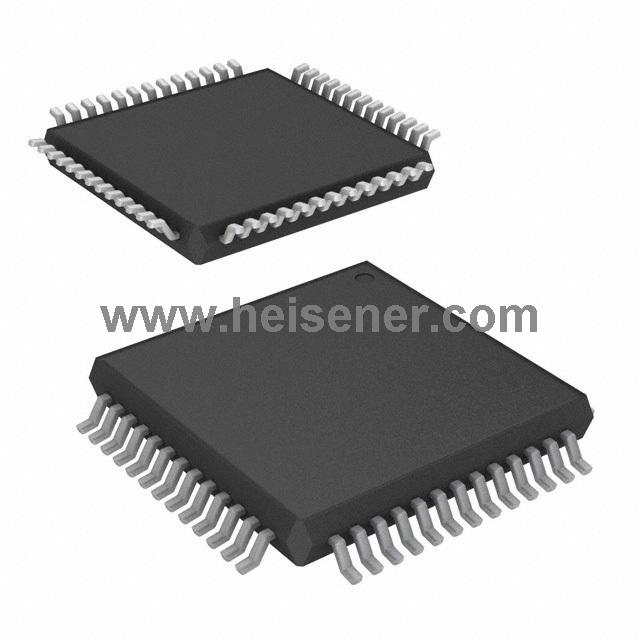
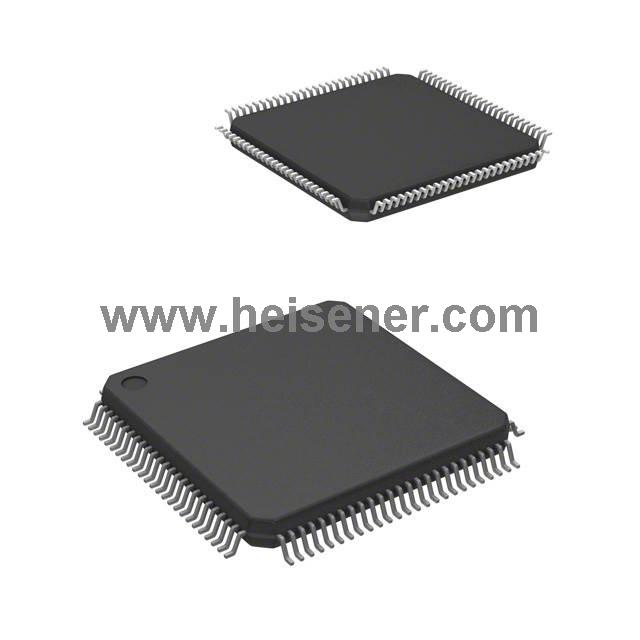
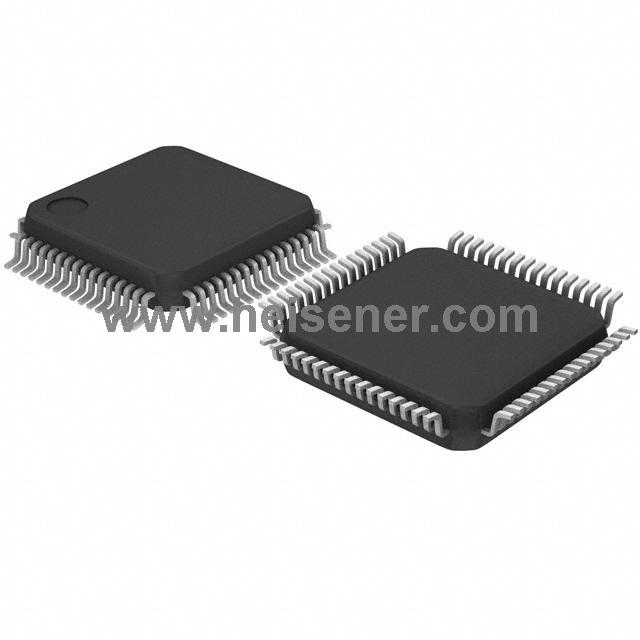
The STM32F405RGT6 uses a 64-pin LQFP (Low-profile Quad Flat Package), which is a square, flat package with evenly distributed pins on all four sides. This type of package is suitable for surface-mount technology (SMT), making it convenient for automated soldering and mass production.

The STM32F405RGT6 is a 32-bit ARM Cortex-M4 microcontroller from STMicroelectronics. It runs at up to 168 MHz, includes a built-in floating-point unit (FPU), DSP instructions, up to 1 MB of Flash, and rich peripherals like USB OTG, CAN, ADCs, DACs, timers, and multiple serial interfaces.
Some popular alternatives include other STM32 families with similar specs, such as STM32F407VGT6, STM32F401RET6, STM32F411RE, or even other Cortex-M4 chips like the NXP MK64FN1M0VLQ12.
To test this MCU, use a compatible development board, connect it to your PC via USB, and install STM32CubeIDE. Write a simple program, compile it, and flash it onto the chip using ST-Link or DFU. Verify the program’s behavior by checking the output with LEDs, serial output, or debugging tools in the IDE.
It is fully compatible with STM32CubeIDE, Keil MDK, and IAR Embedded Workbench. Additionally, it can be programmed via the Arduino IDE by installing the STM32 Cores.